The Digital Industrial Revolution: How Machine Technology Is Bridging the Gap Between Human Expertise and Automated Intelligence
White Wang
•
September 19, 2025
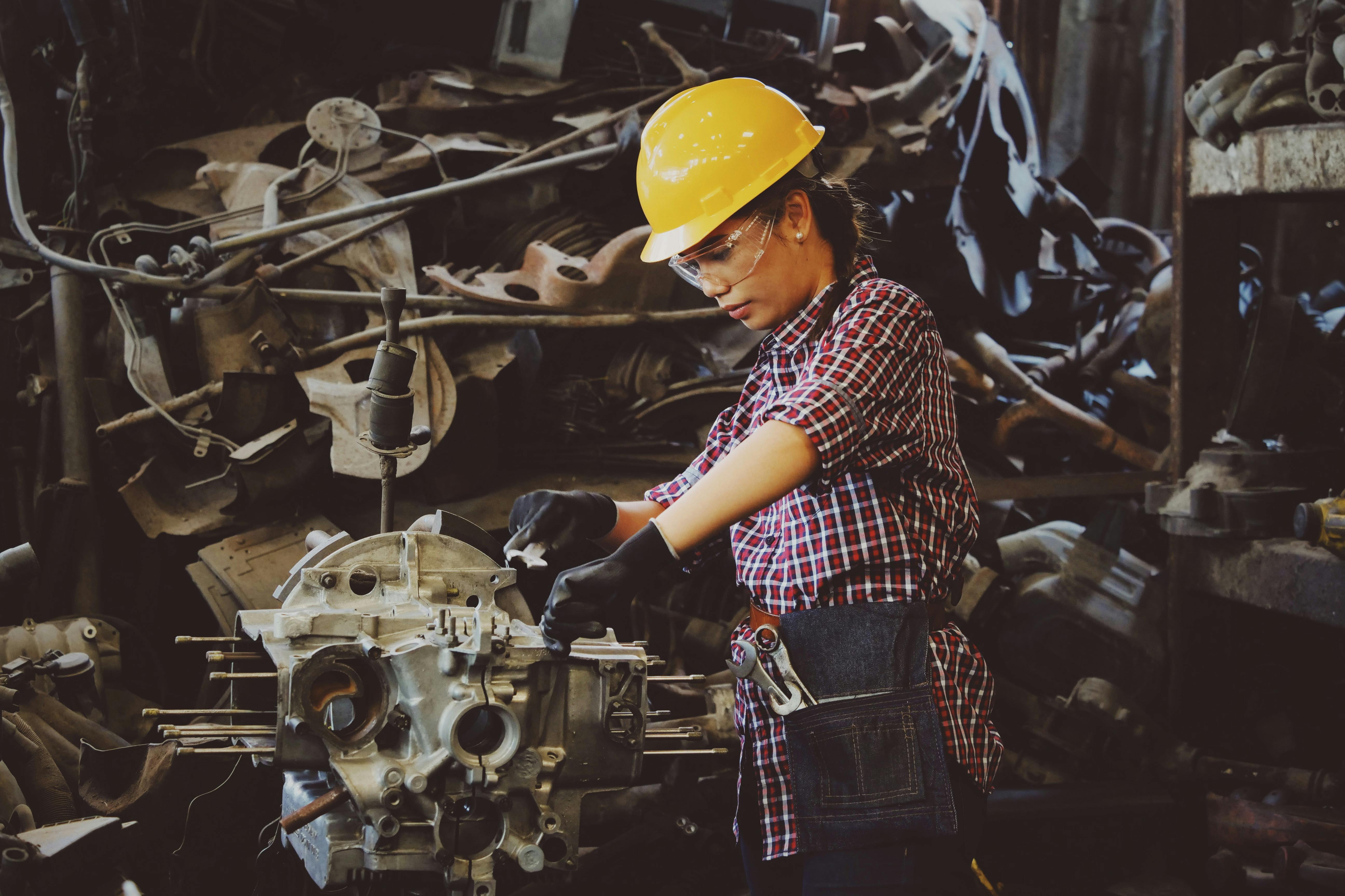
The narrative of industrial revolutions has often been one of replacement—machines supplanting manual labor, automation rendering human tasks obsolete. But the current transformation, the Digital Industrial Revolution or Industry 4.0, is writing a different story. Instead of a simple conflict between human and machine, we are witnessing the rise of a powerful symbiotic relationship.
The future of industry is not about Artificial Intelligence (AI) replacing human expertise; it's about Augmented Intelligence (AuI), where a machine’s processing power and precision are leveraged to amplify human capabilities. This new era is defined by technologies that "bridge the gap," creating a collaborative ecosystem where automated intelligence handles the impossible, and human expertise provides the indispensable.
This bridge is being built on three primary pillars: a physical bridge (Collaborative Robots), an informational bridge (Augmented Reality), and a cognitive bridge (AI-Driven Decision Support).
1. The Physical Bridge: Collaborative Robots (Cobots)
For decades, industrial robots were powerful, dangerous, and locked away in steel cages, completely separate from the human workforce. The "cobot," or collaborative robot, shatters this barrier. Cobots are designed from the ground up to work alongside human beings, acting as a force-multiplying partner rather than a replacement.
How they work: Equipped with advanced sensors, cobots can detect a human's presence and will instantly slow or stop to avoid a collision. They are lightweight, easy to program, and flexible, meaning they can be redeployed for new tasks in hours, not weeks.
Bridging the Gap: Cobots bridge the gap between human dexterity and machine endurance. A human worker provides the fine motor skills, problem-solving ability, and on-the-fly adaptability, while the cobot provides the strength, precision, and tireless repetition.
This partnership is already transforming industries:
In Manufacturing: At BMW and Tesla plants, cobots perform the ergonomically strenuous tasks—like lifting heavy components or bolting parts at awkward angles—while their human partner performs the complex quality check or finesses the final assembly.
In Healthcare: The da Vinci surgical system is a prime example. It is not an "automated surgeon." It is a sophisticated cobot that translates the surgeon's expert hand movements into steadier, more precise micro-movements, eliminating natural tremors and enabling minimally invasive procedures that would be humanly impossible.
In Construction: The SAM (Semi-Automated Mason) robot works with a human mason. The cobot lifts the heavy bricks, applies the mortar, and places them precisely, while the human expert handles the fine-tuning, jointing, and quality control. The result is a 3-5x increase in speed and a dramatic reduction in the physical burnout of the skilled worker.
2. The Informational Bridge: Augmented Reality (AR)
While cobots bridge the physical gap, Augmented Reality (AR) bridges the informational gap. It overlays a layer of digital information directly onto a worker's view of the physical world, creating a powerful interface between the digital twin (the factory's complete virtual model) and the factory floor.
How it works: A technician wearing AR smart glasses (like a Microsoft HoloLens) or using a tablet can look at a piece of machinery and see its real-time operational data—temperature, pressure, and uptime—hovering in their field of vision.
Bridging the Gap: AR augments a worker's expertise by providing instant, context-aware knowledge. It eliminates the need to stop work, walk to a terminal, and pull up a manual.
This technology is a powerful tool for knowledge transfer and efficiency:
Guided Maintenance: A less-experienced technician can perform a complex repair by following a 3D, step-by-step schematic that is digitally "pinned" to the machine they are fixing. If they get stuck, a remote expert in another country can "see what they see" through their glasses and provide real-time, over-the-shoulder guidance. Studies have shown this can improve first-time fix rates by over 30%.
Error-Proof Assembly: On a complex assembly line, AR can project the correct part to be picked and its precise placement location, virtually eliminating human error and slashing training time for new employees by as much as 50%.
3. The Cognitive Bridge: AI-Driven Decision Support
The most profound bridge is the cognitive one. The human brain is a marvel of parallel processing, creativity, and "gut" intuition. A machine, in contrast, excels at serial processing, analyzing billions of data points without fatigue or bias. The future of high-level work lies in combining these two forms of intelligence.
How it works: An AI-driven decision support system acts as a cognitive partner. It sifts through the "Data Mountains" of an organization—production data, supply chain logistics, market trends, even weather patterns—to identify patterns, simulate future scenarios, and provide a set of data-backed recommendations.
Bridging the Gap: The AI handles the "what" (data analysis), freeing the human expert to focus on the "so what" (strategic implementation). The human expert takes the AI's recommendations and applies their holistic, nuanced understanding of the business, its ethical commitments, and its long-term goals to make the final, intelligent decision.
We see this everywhere:
In Healthcare: An AI analyzes a patient's CT scan and medical history, flagging a suspicious anomaly and citing a dozen recent medical studies. The human doctor takes this data, combines it with their knowledge of the patient's lifestyle and personal wishes, and makes the final diagnosis and care plan.
In Engineering: A generative design AI creates a thousand iterations of a new car part that are 40% lighter and 20% stronger. The human engineer then selects the option that best balances performance with manufacturability and cost.
The Human-in-the-Loop: The Architect of the Bridge
This entire collaborative system is made possible by a concept known as Human-in-the-Loop (HITL) machine learning. This is the process where human expertise is used to build, train, and refine the automated intelligence.
An AI is only as smart as the data it's trained on. Human experts are the ones who label the initial data (e.g., "this is a healthy weld," "this is a defective one"), effectively teaching the AI what to look for. More importantly, when the AI encounters an "edge case" or makes a mistake, the human-in-the-loop steps in to correct it. This feedback loop makes the AI smarter, more accurate, and less biased over time, all while ensuring human oversight and accountability.
← Back to Home
The future of industry is not about Artificial Intelligence (AI) replacing human expertise; it's about Augmented Intelligence (AuI), where a machine’s processing power and precision are leveraged to amplify human capabilities. This new era is defined by technologies that "bridge the gap," creating a collaborative ecosystem where automated intelligence handles the impossible, and human expertise provides the indispensable.
This bridge is being built on three primary pillars: a physical bridge (Collaborative Robots), an informational bridge (Augmented Reality), and a cognitive bridge (AI-Driven Decision Support).
1. The Physical Bridge: Collaborative Robots (Cobots)
For decades, industrial robots were powerful, dangerous, and locked away in steel cages, completely separate from the human workforce. The "cobot," or collaborative robot, shatters this barrier. Cobots are designed from the ground up to work alongside human beings, acting as a force-multiplying partner rather than a replacement.
How they work: Equipped with advanced sensors, cobots can detect a human's presence and will instantly slow or stop to avoid a collision. They are lightweight, easy to program, and flexible, meaning they can be redeployed for new tasks in hours, not weeks.
Bridging the Gap: Cobots bridge the gap between human dexterity and machine endurance. A human worker provides the fine motor skills, problem-solving ability, and on-the-fly adaptability, while the cobot provides the strength, precision, and tireless repetition.
This partnership is already transforming industries:
In Manufacturing: At BMW and Tesla plants, cobots perform the ergonomically strenuous tasks—like lifting heavy components or bolting parts at awkward angles—while their human partner performs the complex quality check or finesses the final assembly.
In Healthcare: The da Vinci surgical system is a prime example. It is not an "automated surgeon." It is a sophisticated cobot that translates the surgeon's expert hand movements into steadier, more precise micro-movements, eliminating natural tremors and enabling minimally invasive procedures that would be humanly impossible.
In Construction: The SAM (Semi-Automated Mason) robot works with a human mason. The cobot lifts the heavy bricks, applies the mortar, and places them precisely, while the human expert handles the fine-tuning, jointing, and quality control. The result is a 3-5x increase in speed and a dramatic reduction in the physical burnout of the skilled worker.
2. The Informational Bridge: Augmented Reality (AR)
While cobots bridge the physical gap, Augmented Reality (AR) bridges the informational gap. It overlays a layer of digital information directly onto a worker's view of the physical world, creating a powerful interface between the digital twin (the factory's complete virtual model) and the factory floor.
How it works: A technician wearing AR smart glasses (like a Microsoft HoloLens) or using a tablet can look at a piece of machinery and see its real-time operational data—temperature, pressure, and uptime—hovering in their field of vision.
Bridging the Gap: AR augments a worker's expertise by providing instant, context-aware knowledge. It eliminates the need to stop work, walk to a terminal, and pull up a manual.
This technology is a powerful tool for knowledge transfer and efficiency:
Guided Maintenance: A less-experienced technician can perform a complex repair by following a 3D, step-by-step schematic that is digitally "pinned" to the machine they are fixing. If they get stuck, a remote expert in another country can "see what they see" through their glasses and provide real-time, over-the-shoulder guidance. Studies have shown this can improve first-time fix rates by over 30%.
Error-Proof Assembly: On a complex assembly line, AR can project the correct part to be picked and its precise placement location, virtually eliminating human error and slashing training time for new employees by as much as 50%.
3. The Cognitive Bridge: AI-Driven Decision Support
The most profound bridge is the cognitive one. The human brain is a marvel of parallel processing, creativity, and "gut" intuition. A machine, in contrast, excels at serial processing, analyzing billions of data points without fatigue or bias. The future of high-level work lies in combining these two forms of intelligence.
How it works: An AI-driven decision support system acts as a cognitive partner. It sifts through the "Data Mountains" of an organization—production data, supply chain logistics, market trends, even weather patterns—to identify patterns, simulate future scenarios, and provide a set of data-backed recommendations.
Bridging the Gap: The AI handles the "what" (data analysis), freeing the human expert to focus on the "so what" (strategic implementation). The human expert takes the AI's recommendations and applies their holistic, nuanced understanding of the business, its ethical commitments, and its long-term goals to make the final, intelligent decision.
We see this everywhere:
In Healthcare: An AI analyzes a patient's CT scan and medical history, flagging a suspicious anomaly and citing a dozen recent medical studies. The human doctor takes this data, combines it with their knowledge of the patient's lifestyle and personal wishes, and makes the final diagnosis and care plan.
In Engineering: A generative design AI creates a thousand iterations of a new car part that are 40% lighter and 20% stronger. The human engineer then selects the option that best balances performance with manufacturability and cost.
The Human-in-the-Loop: The Architect of the Bridge
This entire collaborative system is made possible by a concept known as Human-in-the-Loop (HITL) machine learning. This is the process where human expertise is used to build, train, and refine the automated intelligence.
An AI is only as smart as the data it's trained on. Human experts are the ones who label the initial data (e.g., "this is a healthy weld," "this is a defective one"), effectively teaching the AI what to look for. More importantly, when the AI encounters an "edge case" or makes a mistake, the human-in-the-loop steps in to correct it. This feedback loop makes the AI smarter, more accurate, and less biased over time, all while ensuring human oversight and accountability.